 m.quanpro.cn
媒体:内详 作者:佚名
专业号:鄱湖人家
2014/12/3 7:06:09


鄱湖共识,共促人湖和谐
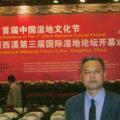
11月20日,第十四届世界生命湖泊大会在南昌开幕。会议由全球自然基金会与江西省人民政府联合主办,来自世界生命湖泊网成员湖泊机构、联合国环境署(UNEP)、联合国开发计划署(UNDP)、国际自然保护联盟(IUCN)、世界自然基金会(WWF)等国际组织以及30多个国家和地区的代表参加会议。21日,第十四届世界生命湖泊大会、世界生命湖泊网、全球自然基金会形成“鄱湖共识”,原文如下:
鄱湖共识
携起手来,共同保护世界湖泊的生命之源
水乃生命之源,湖泊乃地球上天然的盛水巨盆,是孕育生命的天然场所。在人类社会漫长的演进过程中,湖泊以其慷慨和无私,哺育了人类文明,涵养了生物的多样性,其恩泽为人类世世代代所感念。
湖泊和湿地又是自然界中非常脆弱的生命系统。在人类活动和全球气候变化的双重作用下,世界湖泊生态系统正面临着严峻挑战,尤其是随着人类活动对湖泊的影响日益加剧,造成了大量的湖泊污染和严重富营养化,许多湖泊功能退化、甚至逐渐从地球上消失,极大的影响着人类生产和生活。中国2014气候变化研究报告指出,气候变化对水资源,特别是亚热带干旱地区的水资源产生巨大影响,地球温度每升高1度,全球大约7%的人口将面临至少20%水资源的减少。因此,迫切需要世界各国携起手来,共解湖泊发展之困、共谋人类与湖泊和谐发展之路,共同捍卫湖泊的“生命之源”。
发展是永恒的主题。无论是发达国家或发展中国家,都面临着经济发展与环境保护的两难选择。尤其是发展中国家,正在加速实现工业化和城镇化,保护环境的压力更为巨大,如何在加快发展中,保护好我们共同的“一湖清水”是世界各国湖区人民和热爱湖泊的友好人士的共同梦想。
如何使梦想成为现实?
本次世界生命湖泊大会的与会者一致认为,必须在尊重湖泊湿地生态系统的同时,开展一系列行之有效的行动。目前,湖泊保护有制度和法律保障,但是这些制度和法律亟需得到切实实施,许多防治污染技术手段也需要应用于实践。土地利用规划和社会经济发展中必须要考虑到湖泊保护。退化湖泊的恢复是重中之重的任务。氮的不断增加使生态环境不堪重负,导致湖泊富营养化和水质酸化。各国政府都必须出台相应的行动计划来遏制氮的增加,缓解生态压力。为了维持整个水资源生态系统,必须在实施水资源保护政策同时,采用合理的水价。水费低廉会滋生错误的用水理念:工业企业极少循环利用水,农业生产大量浪费水,而那些高尔夫球场则与水资源抢夺土地,挤占了应有的水资源空间。
目前中国境内的许多湖泊面临严重的污染问题。鄱阳湖是为数不多没有受到严重污染或富营养化的大型湖泊之一。中国的“零净损失”湿地保护政策亟待付诸实践。鄱阳湖是中国最大的淡水湖,是江西的母亲湖,是世界著名的候鸟栖息地。目前鄱阳湖的生态系统较为良好,然而,湖区城镇化推进和工业化发展是其可持续发展面临的巨大挑战。近年来,中国政府高度重视鄱阳湖的生态保护,采取了一系列措施,如退田还湖,设立鄱阳湖生态经济区等,以促进湖区可持续发展。
世界生命湖泊组织赞赏江西省政府在保护鄱阳湖方面所做出的长期努力,如恢复湖区植被,实施完善的湖泊保护制度及法律,在湖区建立自然保护区,及监测水质和其他生态系统功能。目前,江西省政府计划采取进一步措施,确保鄱阳湖枯水期必要的最低水位,以维持其生态系统功能和人民生活的需要。我们认为,这些举措都是十分积极和有效的。
各级政府、科研机构和民间组织的共同努力,使得鄱阳湖成为世界湖泊保护的成功案例。世界生命湖泊组织将通过分享各国湖泊保护的成功经验和技术,为鄱阳湖保护作出积极贡献,并将在世界范围内,推广鄱阳湖保护的经验。无疑,湖泊保护之路漫长、任重道远,但在实现人-湖和谐的愿景上,鄱阳湖已迈出了重要的一步。
第十四届世界生命湖泊大会
世界生命湖泊网
全球自然基金会
2014.11.21
Common Understandings of Poyang Lake 2014
Joining hands together, to protect the world's lakes as a source of life
Water is the source of life, and lakes are important natural basins for water on the earth and therefore natural places for life. In the long evolution process of human society, lakescontribute with irreplaceable “natural services” to the well being of human civilization, and their grace should be remembered by people from generation to generation.
Lakes and wetlands belong to the most valuable and most endangered ecosystems on our planet. They continue to face serious problems or to be lost as a consequence of human actions: pollution, eutrophication, over-abstraction of water, destruction of shores because of urbanizations ….. the list of treats to lakes and wetlands is long, despite the fact that our survival, our well-being and economical development relies on their diverse ecosystem services. Especially lakes in densely populated areas are massively affected and the impact of climate change contributes to an even stronger competition between agriculture, drinking water resources, ecosystems, settlements, industry and energy production. The IPCC Report 2014 on Climate Change underlines the dramatic consequences for our freshwater resources – especially in the dry subtropical regions: For each degree of global warming, approximately 7 % of the global population will be exposed to a decrease of renewable water resources of at least 20%. The dramatic situation of many lakes requires people toimmediately join hands all around the world to solve the numerous conflicts, and seek for a harmonious development between humans and lakes.
Development is an eternal theme. In developed countries as well as in developing countries,we are all faced with the challenge of finding the right way towards a sustainable development based on the protection of the finite natural resources of our planet. Especiallyin developing countries, the accelerating industrialization and urbanization puts a huge pressure on the environment in general and the lakes and wetlands in special. It is a commonvision of all Living Lakes members and for the people living in lake regions all over the world to protect their “lake of clear water” in an accelerating development.
How to make this vision reality?
The participants of the 14th International Living Lakes Conference in Nanchang underline the need of a substantial change of behavior towards profound respect for the ecosystemsservices provided by lakes and wetlands. In most of the cases, legislation for lake protection is there and it is often good, but needs to be better implemented and enforced. Technology to stop pollution is known and available – but application is lacking. Lake protection needs to be a crucial element of land use planning and of socio-economic development policies;restoration of degraded lakes should be a top priority. The increasing overload of nitrogen is responsible for the eutrophication and acidification of many lakes and national and regional governments are strongly requested to approve Nitrogen Action Plans to reduce the overload. A sound water saving policy needs to be implemented as well as the right price for water considering the costs for the maintenance of the water ecosystems. Low price policy gives the wrong incentives: Industry recycles too little water, agriculture wastes too much water, golf courses are competing with water for households.
Also many of China′s are facing severe problems. Except Poyang Lake, most of the largerlakes in China are seriously polluted or eutrophicated. We welcome the Chinese “Zero Loss of Wetlands Policy” which needs to be implemented urgently.
Poyang Lake is China's largest freshwater lake. The “mother lake” of JiangXi province is still a more or less intact ecosystem and a world famous site for migratory birds. Increasing urbanization and industry in the lake region are the biggest challenges for the sustainable development of Poyang Hu. For many years, the Chinese government acknowledges the importance of the protection of the Poyang Lake and its natural resources, and implementeda series of important measures such as returning farmland to lake or the approval of the “Ecological Economic Zone Planning of Poyang Lake” in order to support the sustainable development of the lake district.
The International Living Lakes Network recognizes the long term efforts of the JiangXiProvince for the protection of Poyang Lake: among others the reforestation in the watershed, implementation of sound lake protection legislation, the creation of nature reserves around the lake and profound monitoring of water quality and other ecosystem functions. Currently, JiangXi Province is going to take necessary measures to assure the minimum water level of Poyang Lake during the dry season in order to assure the ecosystem functions to maintain nature and people’s life. This is positive.
The joint effort of the regional government, research institutions and NGO′s makes Poyang Lake a positive example for the type of partnership which we need to achieve successful lake protection. The International Living Lakes Community contributes with expertise and experience from lakes all over the world and looks forward to communicate Poyang Lake as the positive example for lake protection and circular economy in China and all globally.There is still a long way to go and no easy solutions can be provided, but Poyang Hu is on the right way to become an important piece of the common vision of a harmonious relation between people and lakes.
Signed
On behalf of
The participants of the 14th World Living Lake Conference
GNF, The living lakes network
21th Nov. 2014
来源:http://www.jxsl.gov.cn/id_ff80808149ad87bf014a090a2dc437d1/news.shtml
阅读 347
版权声明:
1.依据《服务条款》,本网页发布的原创作品,版权归发布者(即注册用户)所有;本网页发布的转载作品,由发布者按照互联网精神进行分享,遵守相关法律法规,无商业获利行为,无版权纠纷。
2.本网页是第三方信息存储空间,阿酷公司是网络服务提供者,服务对象为注册用户。该项服务免费,阿酷公司不向注册用户收取任何费用。
名称:阿酷(北京)科技发展有限公司
联系人:李女士,QQ468780427
网络地址:www.arkoo.com
3.本网页参与各方的所有行为,完全遵守《信息网络传播权保护条例》。如有侵权行为,请权利人通知阿酷公司,阿酷公司将根据本条例第二十二条规定删除侵权作品。
1.依据《服务条款》,本网页发布的原创作品,版权归发布者(即注册用户)所有;本网页发布的转载作品,由发布者按照互联网精神进行分享,遵守相关法律法规,无商业获利行为,无版权纠纷。
2.本网页是第三方信息存储空间,阿酷公司是网络服务提供者,服务对象为注册用户。该项服务免费,阿酷公司不向注册用户收取任何费用。
名称:阿酷(北京)科技发展有限公司
联系人:李女士,QQ468780427
网络地址:www.arkoo.com
3.本网页参与各方的所有行为,完全遵守《信息网络传播权保护条例》。如有侵权行为,请权利人通知阿酷公司,阿酷公司将根据本条例第二十二条规定删除侵权作品。